
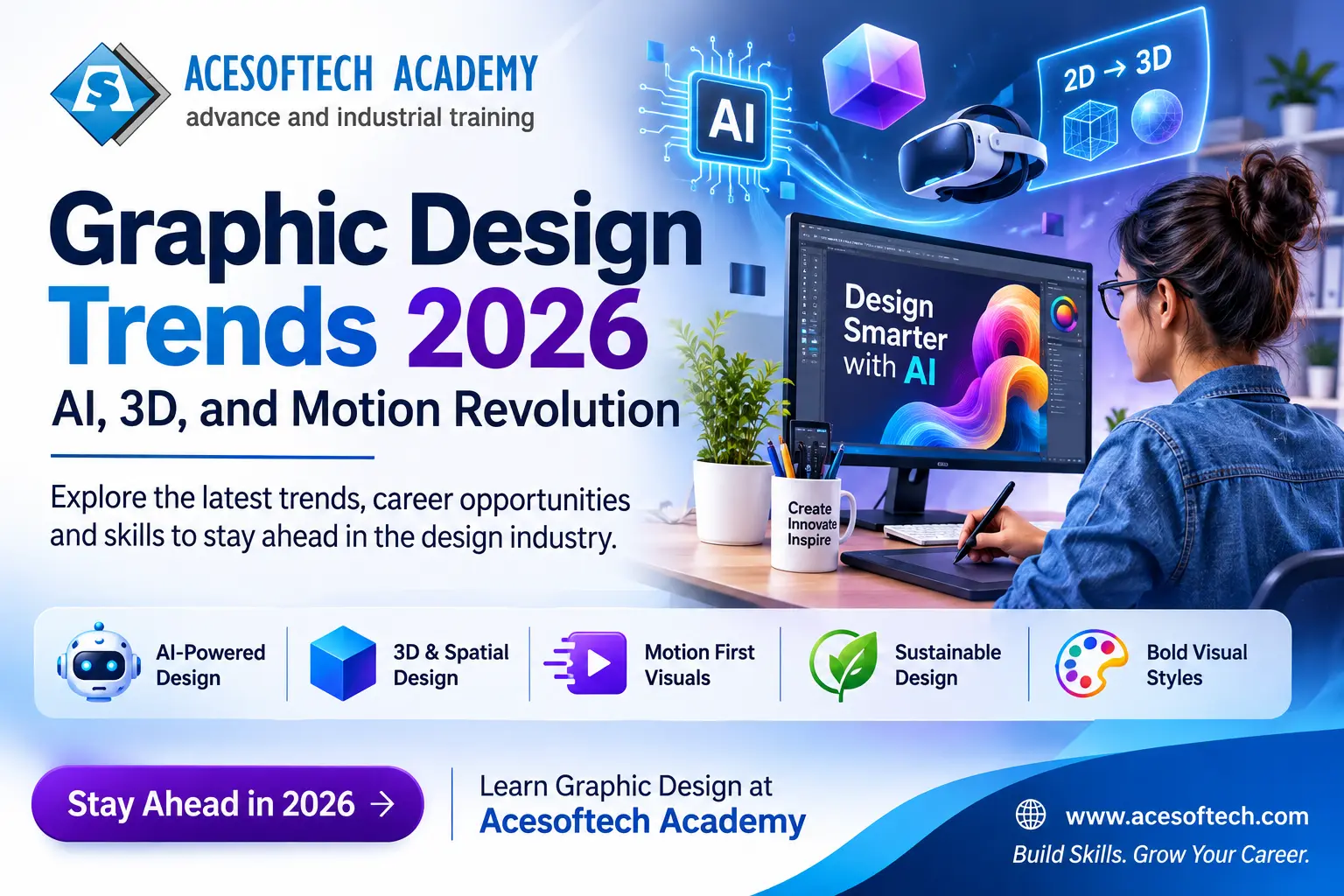
Graphic design is evolving faster than ever. What once required hours of manual designing, editing and creative experimentation can now be completed more efficiently with the help of Artificial Intelligence (AI). However, technology is not replacing creativity. Instead, it is changing how designers work, think and communicate with audiences.
In 2026, graphic design goes beyond creating attractive images, logos and social media posts. Designers are increasingly expected to understand branding, visual storytelling, AI-powered workflows, motion graphics, 3D environments and user experience.
Businesses are also looking for creative professionals who can combine design skills with marketing knowledge and strategic thinking. Whether you are a beginner, a professional designer or someone planning to enter the creative industry, understanding these changes can help you prepare for future opportunities.
Let’s explore the latest graphic design trends, AI tools, career options, salary expectations and essential skills shaping the industry in 2026.
1. How AI Is Transforming the Graphic Design Industry
One of the biggest changes in graphic design is the growing use of AI-powered tools. Designers are gradually moving from traditional production-based roles towards creative direction and workflow management.
AI tools can assist with repetitive tasks such as background removal, image resizing, layout suggestions and content variations. This allows designers to spend more time developing concepts, understanding audiences and creating meaningful visual experiences.
The modern designer is becoming a creative orchestrator who manages AI tools while maintaining control over brand identity, storytelling and design quality.
However, AI-generated designs still require human judgement. Understanding emotions, cultural context, brand personality and visual communication remains essential.
2. Top Graphic Design Trends in 2026
Several visual styles are influencing branding, advertising, digital marketing and website design.
AI Surrealism
AI surrealism combines futuristic visuals, unusual compositions, glowing elements and liquid textures. Designers use these techniques to create eye-catching advertisements, digital artwork and experimental brand campaigns.
Retro Futurism 2.0
Retro futurism brings together nostalgic Y2K-inspired elements and modern minimalism. Neon colours, glass effects, futuristic typography and digital textures are becoming popular in creative projects.
Bento Grid Layouts
Bento grid layouts organise information into clean, modular sections. Inspired by compartment-based layouts, this design approach makes websites, presentations and promotional graphics easier to understand.
Kinetic Typography and Motion-First Design
Typography is no longer limited to static text. Kinetic typography uses movement, animation and interactive effects to make messages more engaging.
Similarly, motion-first design focuses on animated visuals, short videos and interactive experiences rather than relying entirely on static graphics.
Human-Made Premium Design
As AI-generated content becomes more common, brands are also showing interest in distinctive human creativity. Hand-drawn illustrations, imperfect textures, customised typography and original visual concepts help businesses create a recognisable identity.
3. The Rise of 3D, AR and Spatial Design
Graphic design is expanding beyond traditional two-dimensional screens.
Augmented Reality (AR), Virtual Reality (VR) and spatial computing are creating new possibilities for designers. Instead of designing only posters, banners and website graphics, professionals can now explore immersive environments and interactive experiences.
Tools such as Blender and Spline help designers develop 3D objects, environments and product visualisations.
This shift is creating opportunities in areas such as:
- 3D visualisation and product design
- AR and VR experiences
- Interactive brand environments
- Spatial user interface design
- Motion graphics and animation
Designers interested in these areas can expand their career opportunities by learning 3D modelling, animation and interactive design.
4. Graphic Design Career Opportunities in 2026
The graphic design job market is changing. Repetitive production tasks are increasingly supported by automation, while businesses continue to need professionals who can develop creative strategies and strong brand identities.
Some promising career paths include:
Brand and Visual Designer: Creates logos, brand guidelines, marketing materials and consistent visual identities.
Motion Graphics Designer: Develops animations, promotional videos, animated typography and digital content.
UI/UX Designer: Designs user-friendly websites, applications and digital experiences.
Creative Strategist: Combines visual creativity, marketing knowledge and audience research to develop effective campaigns.
3D and Spatial Designer: Creates 3D environments, product visualisations and immersive digital experiences.
Developing a combination of creative, technical and strategic skills can help designers move beyond basic production work.
5. Graphic Designer Salary in India 2026
Salary depends on experience, location, portfolio quality, technical expertise and the type of organisation. Designers with specialised skills in UI/UX, motion graphics, 3D and AI-assisted workflows may access different opportunities from general production designers.
The following figures are indicative salary ranges, not guaranteed industry averages.
| Job Role | Entry-Level | Mid-Level | Senior-Level |
|---|---|---|---|
| Visual Designer | ₹3.5–6 LPA | ₹8–15 LPA | ₹20–40 LPA |
| Motion Designer | ₹5–8 LPA | ₹12–22 LPA | ₹30–55+ LPA |
| AR/3D Designer | ₹6–10 LPA | ₹18–30 LPA | ₹45–80+ LPA |
| UI/UX Designer | ₹5.5–9 LPA | ₹14–25 LPA | ₹35–65 LPA |
Freelancing also provides opportunities to work with international clients. Experienced designers may charge hourly rates depending on their portfolio, specialisation and client requirements. Platforms such as Toptal and Contra can help professionals connect with potential clients.
6. Essential Skills Every Graphic Designer Should Learn
To remain competitive, designers should build a balanced skill set that combines traditional design knowledge with modern technology.
Core Design Skills: Typography, colour theory, composition, branding and visual communication form the foundation of professional graphic design.
AI Design Skills: Learn how to use tools such as Adobe Firefly and Midjourney for creative exploration, image generation and faster design workflows.
Motion Graphics: Adobe After Effects and animation techniques are useful for creating engaging digital content.
3D Design: Blender and Spline help designers explore product visualisation, 3D graphics and interactive environments.
Creative Strategy: Storytelling, audience psychology, marketing knowledge and brand positioning help designers create visuals that communicate effectively.
Learning these skills together can make a designer more versatile and adaptable.
7. Popular Graphic Design Tools to Explore in 2026
Modern designers use different tools depending on their projects and specialisations.
- Adobe Firefly: AI-assisted image generation and creative editing.
- Figma: Interface design, collaboration and design systems.
- Spline: Browser-based 3D design and interactive experiences.
- Runway: AI-powered video creation and editing.
- Adobe After Effects: Motion graphics and animation.
- Blender: 3D modelling, rendering and animation.
- Midjourney: AI-assisted visual exploration and concept development.
Knowing how to use these tools is valuable, but understanding design principles is what helps professionals produce effective results.
8. How SEO and Personal Branding Help Graphic Designers
Graphic designers also need to build an online presence to attract clients and employers. A professional portfolio website, project case studies and useful industry content can improve visibility.
Instead of simply uploading finished designs, explain the creative process behind each project. Show before-and-after comparisons, describe the design challenges and explain how your decisions support the client’s brand objectives.
Search engine optimisation (SEO) can help your portfolio reach people searching for specific design services. Focus on relevant keywords, descriptive project titles, image alt text and useful case studies.
Building expertise around a particular industry, such as eCommerce, healthcare or education, can also help establish a recognisable professional identity.
9. How to Prepare for a Graphic Design Career in 2026
If you are planning to become a graphic designer, start with the fundamentals before moving into advanced tools.
Learn typography, colour combinations, layout principles and visual communication. Practise creating logos, social media creatives, brochures and website graphics.
Once you understand the basics, explore AI design tools, motion graphics and 3D applications. Build a portfolio featuring original projects that demonstrate both creativity and problem-solving abilities.
Structured training and practical project experience can make this learning process easier. Acesoftech Academy provides professional training opportunities for individuals interested in developing technology and creative skills.
Choose a learning path that matches your interests, practise consistently and keep updating your portfolio as design technology evolves.
Graphic design in 2026 is much more than creating attractive visuals. AI-powered workflows, 3D environments, motion graphics, interactive experiences and brand storytelling are transforming the profession.
While automation is making repetitive tasks easier, human creativity, strategic thinking and originality remain important. Designers who combine strong fundamentals with modern tools and business understanding can prepare themselves for changing industry requirements.
If you want to build a career in this field, start learning the basics, experiment with AI tools, explore specialised skills and develop a strong portfolio.
The future belongs to designers who know how to combine creativity, technology and strategy to create meaningful visual experiences.