
Building and managing a website has become more demanding as businesses expect better performance, stronger security, flexible design, and personalised digital experiences. Content Management Systems (CMS) are adapting to these expectations by introducing new technologies and simplifying website management.
Drupal is one of the open-source platforms continuing to evolve in response to these changes. Known for its flexibility, security, and ability to handle complex websites, it has traditionally been popular among developers, government organisations, educational institutions, and large businesses.
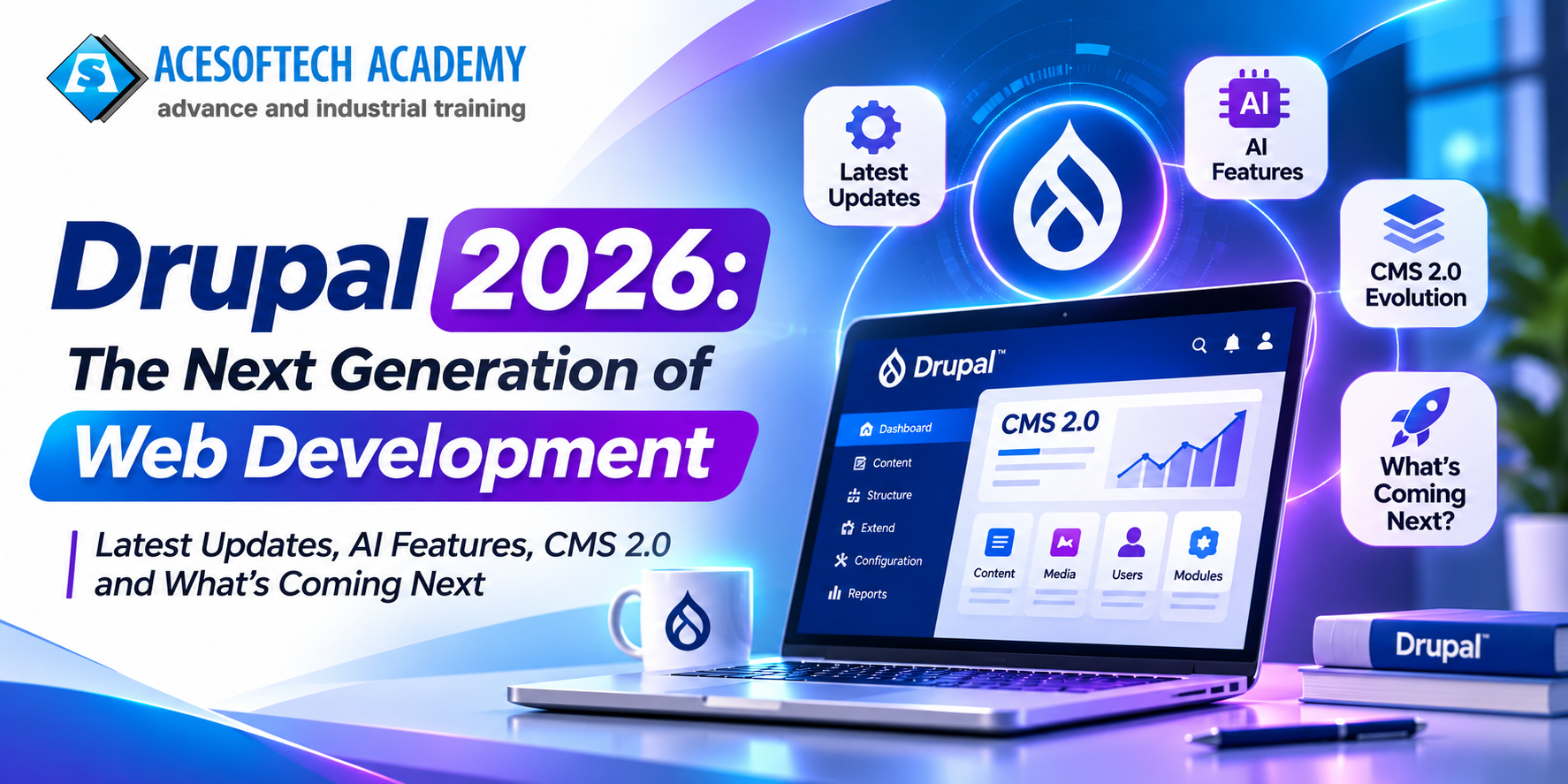
However, the Drupal ecosystem is changing. The introduction of Drupal CMS 2.0, growing artificial intelligence capabilities, improvements to Drupal 11, and preparations for Drupal 12 are bringing new opportunities for website owners and developers.
In 2026, the focus is not just on creating websites but also on making content management more efficient and development workflows more accessible.
Let’s explore the major Drupal developments and understand how they could influence the future of web development.
1. Drupal CMS 2.0 Is Changing the Website Building Experience
One of the major developments in the Drupal ecosystem is Drupal CMS 2.0. Its introduction represents an effort to make Drupal more approachable for people who want to build and manage websites without depending heavily on technical teams.
In the past, creating a Drupal website often involved considerable configuration, module selection, and development work. While this flexibility was valuable, it could make the platform challenging for beginners and non-technical users.
Drupal CMS 2.0 aims to make the process more straightforward by improving the editing experience and introducing tools that simplify website creation.
A major highlight is Drupal Canvas, which provides a visual approach to building and editing website pages. Instead of relying entirely on backend configuration, users can work with page components and see how their content appears.
The platform also offers improved templates and reusable components, helping businesses establish websites more efficiently.
These changes make Drupal more attractive to marketing teams, content managers, and organisations that want greater control over their website content.
2. Artificial Intelligence Is Becoming Part of Drupal
Artificial intelligence is influencing almost every area of digital technology, and content management is no exception. Drupal is gradually expanding its AI ecosystem to help developers and content teams complete routine tasks more efficiently.
The Drupal AI initiative focuses on connecting AI capabilities with existing website workflows. Rather than treating artificial intelligence as a separate technology, the goal is to make it a useful part of everyday content management and development.
For example, AI-assisted writing tools can help content teams develop initial drafts, generate ideas, and improve existing website content. Developers can also explore AI integrations to support different technical workflows.
Another important area is AI automation. Repetitive activities involved in content creation and website administration may become easier to manage through configurable AI-powered processes.
Security and responsible usage are also important. Features such as AI Guardrails help organisations establish controls around how AI tools interact with their systems.
For businesses, these developments could mean less time spent on repetitive work and more time available for improving website quality, user experience, and digital strategy.
3. Drupal 11 Continues to Improve Performance and Security
Drupal 11 remains an important choice for organisations planning modern website projects. Its ongoing development focuses on improving stability, security, compatibility, and the overall experience for developers.
Performance is especially important for websites that receive significant traffic or manage large amounts of content. A well-optimised Drupal installation can support complex website structures while maintaining a smooth experience for visitors.
Security is another important consideration. Drupal regularly releases maintenance and security updates to address vulnerabilities and improve platform reliability.
The Drupal 11 development cycle also includes improvements to dependencies and development tools, helping developers maintain websites using modern technologies.
Businesses considering Drupal 11 should evaluate their hosting infrastructure, module compatibility, website requirements, and long-term maintenance plans before choosing an implementation approach.
Keeping the CMS updated is equally important. Regular maintenance helps reduce technical problems and ensures that websites remain compatible with supported software versions.
4. Drupal 10 End of Life: Businesses Should Prepare for Migration
One important issue Drupal website owners need to consider in 2026 is the end of support for Drupal 10.
Drupal 10 is scheduled to reach end of life on December 9, 2026. This means organisations still using this version should prepare their upgrade plans rather than waiting until the last moment.
Continuing to operate an outdated CMS can create challenges involving security, compatibility, and ongoing maintenance. It may also become harder to access supported updates and modern development features.
Moving from Drupal 10 to Drupal 11 requires proper planning. Businesses should first review their existing website architecture, custom modules, contributed extensions, and themes.
A successful migration generally involves creating backups, checking compatibility, testing the upgrade in a staging environment, and carefully reviewing website functionality before making changes to the live platform.
Organisations with large or customised websites should consider involving experienced Drupal developers to minimise migration risks.
Planning early can make the transition easier and help businesses avoid unnecessary disruption.
5. Drupal 12: What Could the Next Major Release Bring?
The development of Drupal 12 is another important topic for the Drupal community.
The next major version is expected to continue modernising the platform and providing a stronger foundation for future website development.
Developers should pay attention to changes in technical requirements, dependencies, deprecated functionality, and compatibility with existing modules.
Drupal’s API-first architecture also creates opportunities for organisations interested in headless development. This approach allows website content to be delivered to different platforms, including mobile applications and modern frontend frameworks.
AI-powered workflows and improved developer experiences are also important areas to watch as the Drupal ecosystem continues to evolve.
However, businesses should distinguish between features that have been officially released and those that remain part of development discussions or future plans.
Before upgrading to Drupal 12, website owners should review the official release information and migration documentation.
6. Changes in Drupal Development Workflows
Drupal is also adapting the way developers contribute to and maintain its core software.
One notable development is the transition towards using the main branch as the primary development branch. This approach brings Drupal’s development process closer to practices followed by many modern open-source projects.
The updated workflow can make collaboration more straightforward for contributors working on new features, improvements, and bug fixes.
For developers, understanding Git, version control, testing, and continuous integration has become increasingly important.
Modern development workflows help teams identify problems earlier, maintain code quality, and manage updates more efficiently.
These improvements are particularly valuable for organisations working on large websites where multiple developers contribute to the same project.
7. Why Businesses Still Choose Drupal for Enterprise Websites
Despite the availability of several CMS platforms, Drupal continues to have an important place in enterprise website development.
Its biggest advantage is flexibility. Businesses can create customised content structures, complex publishing systems, multilingual websites, and advanced user permissions according to their requirements.
Drupal is also suitable for organisations that need to connect their websites with external applications, databases, and business systems.
For example, an educational institution may use Drupal to manage multiple departments, courses, events, and student resources. Similarly, a large organisation may use it to operate several websites through a central content management environment.
Its security-focused development practices and extensive customisation options make it a strong candidate for projects with complex technical requirements.
Choosing the right CMS, however, depends on the size of the project, available resources, maintenance requirements, and business objectives.
8. Skills Developers Should Learn to Work with Modern Drupal
As Drupal continues to develop, the skills required to work with the platform are also expanding.
Understanding basic CMS configuration is useful, but developers working on advanced projects should also have knowledge of PHP, databases, frontend technologies, and application architecture.
Some particularly valuable areas include PHP programming, Drupal module development, Twig templating, API integration, database management, website security, and performance optimisation.
Knowledge of AI tools and automation can also help developers explore new ways of improving website workflows.
Learning these technologies through practical projects can help aspiring developers understand how real-world websites are built and maintained.
Those interested in strengthening their technical knowledge can explore web development training and programming courses at Acesoftech Academy, where different development technologies are covered through professional training programmes.
Drupal is entering an important phase of development in 2026. Its evolution is bringing together easier website creation, visual editing, artificial intelligence, improved development workflows, and modern content delivery capabilities.
Drupal CMS 2.0 is making the platform more accessible to content teams, while AI integration is opening new possibilities for automation and productivity. At the same time, Drupal 11 continues to receive improvements, and the upcoming Drupal 12 release represents another step in the platform’s long-term development.
For businesses, these changes offer an opportunity to review their existing CMS infrastructure and plan future website improvements. For developers, they highlight the importance of learning modern programming technologies and keeping up with changes in the Drupal ecosystem.
Ultimately, Drupal’s future will depend on how effectively it combines its traditional strengths with the changing needs of modern digital businesses. Staying informed about these developments can help organisations and developers make smarter decisions about their websites and technology investments.